Save a Natural Tooth or Choose a Dental Implant?
When a tooth is badly damaged, patients are often presented with two very different paths: restore the natural tooth or remove it and replace it with a dental implant. Both options can be successful in the right situation. The important question is not whether natural teeth or implants are better in general. It is which option has the more favorable and maintainable prognosis for the specific tooth and the specific patient.
Dr. Gordon J. Christensen addressed this decision in his article, “Implant placement vs. tooth retention.” His central message remains useful: consider the sound tooth structure, bite forces, treatment needs, cost, personal preferences, and realistic potential for long term service. Extraction is irreversible, so patients should understand both paths first.

At a Glance
A natural tooth is often worth preserving when it can be predictably restored and maintained.
A damaged tooth may have more potential than its appearance suggests if enough strong structure remains.
Natural teeth have a supporting ligament that provides sensation and slight movement under pressure.
Saving a tooth may avoid extraction, implant surgery, added healing time, and some replacement costs.
Implants are valuable when a tooth cannot be predictably restored, but they still require daily care and professional monitoring.
A second opinion can be helpful when the prognosis is uncertain or the proposed treatment is irreversible.
The Decision Should Begin With Prognosis
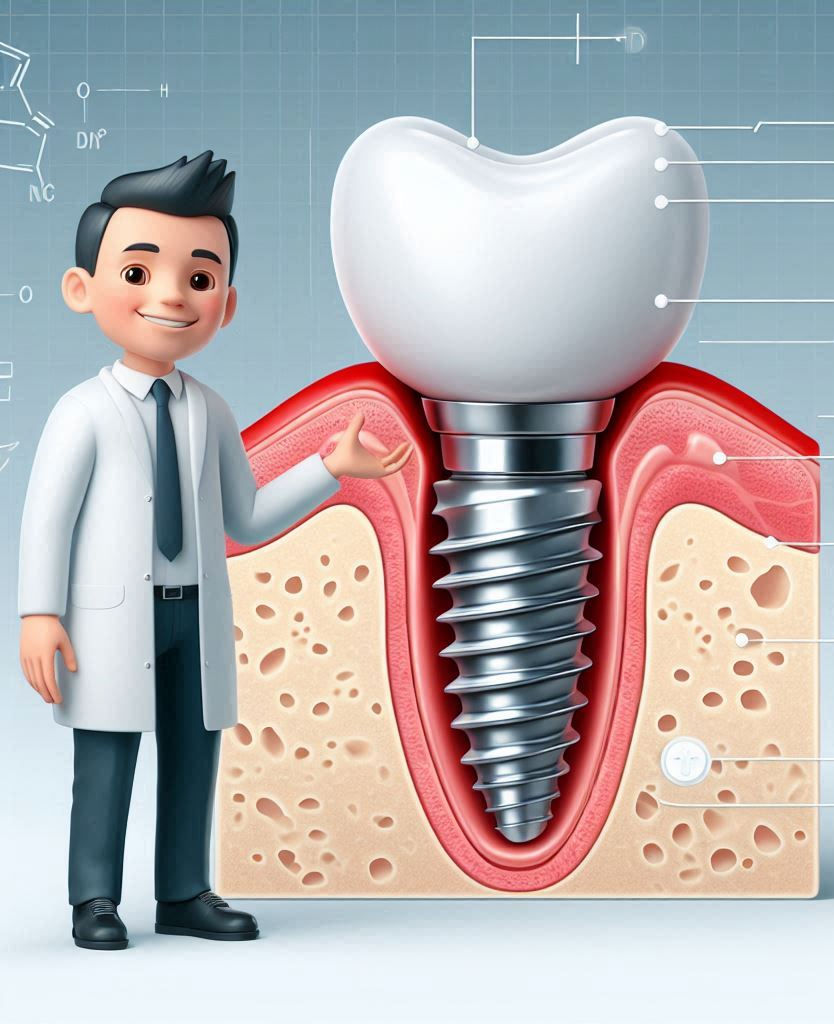
Patients sometimes hear that an implant is newer, stronger, or more permanent than a natural tooth. That description is too simple. A dental implant is an artificial root that supports a replacement tooth. It can be an excellent solution when a tooth is missing or cannot be saved. It is not automatically an improvement over a natural tooth that still has a favorable prognosis.
The first question should be whether the tooth is restorable. A dentist must evaluate the remaining tooth structure, roots, surrounding gums and bone, decay or fractures, and the way the tooth contacts the opposing teeth. Two teeth that look equally damaged may therefore have very different recommendations.
Why Preserving a Restorable Natural Tooth Can Be Valuable
A natural tooth has a living support system
A natural tooth is connected to the surrounding bone by the periodontal ligament. This thin supporting tissue helps provide sensation and allows a very small amount of movement when you chew. That movement is part of the way a natural tooth responds to pressure.
A dental implant becomes rigidly connected to the bone and does not have the same ligament. It can function very well, but it does not reproduce every biological feature of a natural tooth. Preserving a healthy root and its supporting tissues can therefore have meaningful value.

Visible damage does not tell the whole story
A tooth can look severely broken and still retain important strong structure. Christensen explained that selected teeth may have excellent long term potential even when a substantial portion of the visible tooth is missing, provided that enough sound structure remains and the bite is favorable.
This does not mean that every badly damaged tooth should be saved. Appearance alone cannot determine the prognosis. Examination and appropriate imaging are needed to learn whether a protective restoration is realistic.
Saving the tooth may avoid additional surgery
When a tooth can be restored, keeping it may avoid extraction and implant placement. Implant treatment can involve removal of the tooth, healing, possible bone grafting, placement of the implant, and delivery of the final crown. Restoring a tooth can also require several procedures, so the comparison should include the complete plan for both options.

Preserving the tooth may cost less
Christensen’s original cost figures are now outdated, but the practical lesson remains relevant: compare every step, not only the extraction or implant placement. The estimate may include root canal treatment, restoration, extraction, grafting, implant, abutment, crown, temporary tooth, and follow up care. Retaining a restorable tooth may cost less, while extensive procedures for a tooth with a poor prognosis may change the calculation.

Grinding and Clenching Matter for Both Options
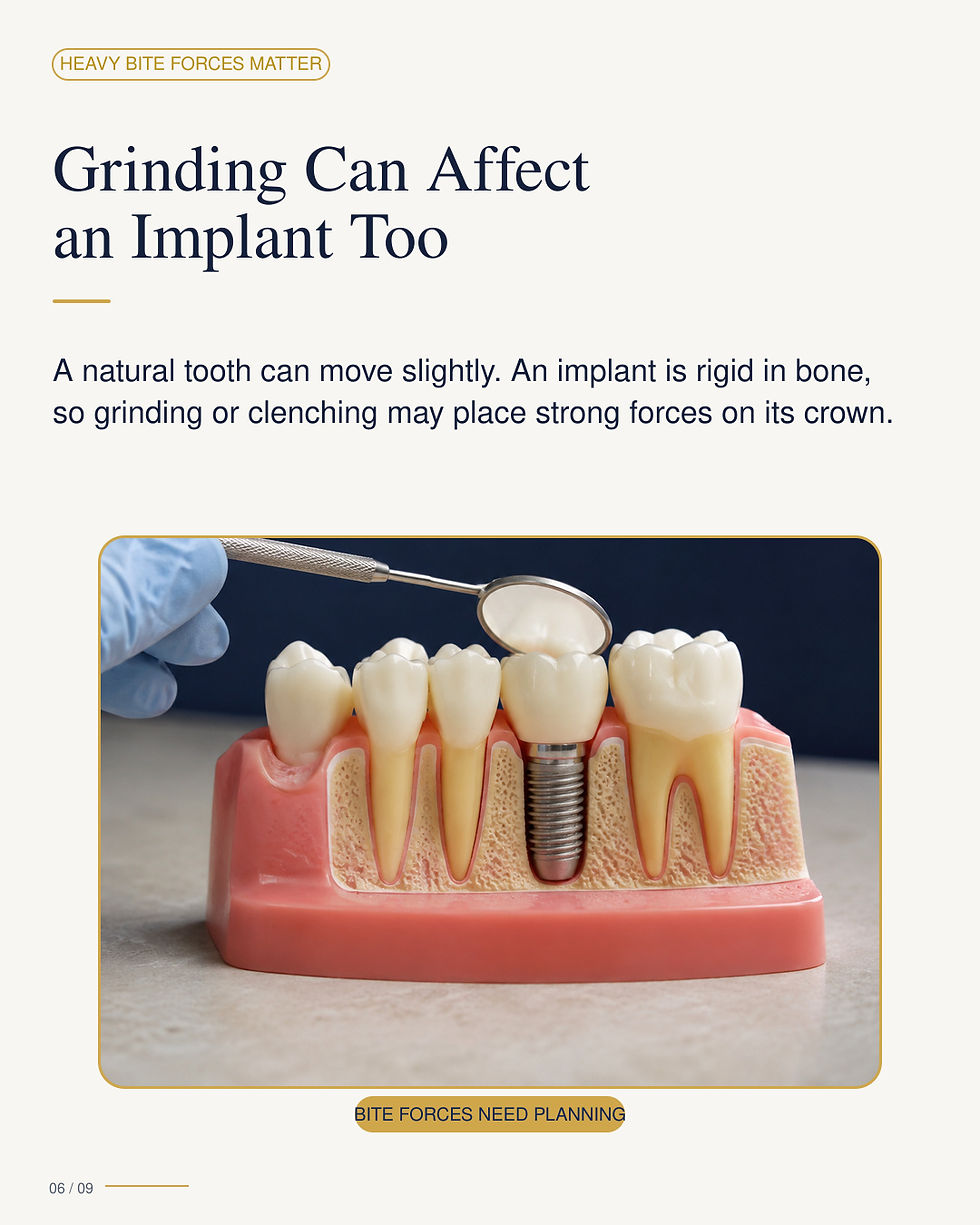
Heavy bite forces can affect a restored natural tooth, but they can also affect an implant crown and its components. Because an implant is rigid in bone, careful bite planning is important for patients who grind or clench. Excessive force may contribute to chipping or fracture of a crown, loosening or damage to implant components, or wear on opposing teeth.
This is a reason to evaluate the bite before treatment and plan protection when appropriate. The same care is important when restoring a weakened natural tooth.
A Dental Implant Is Not Maintenance Free
An implant cannot develop a cavity because it is not a natural tooth. The gums and bone around it can still become inflamed or diseased. Plaque can collect around an implant, and the supporting tissues require daily cleaning and regular professional evaluation.
Patients with implants still need brushing, cleaning between the teeth, routine dental visits, and monitoring of the gums, bone, bite, and restoration.

When an Implant May Be the More Predictable Choice
Some teeth cannot be restored in a way that is strong, cleanable, and maintainable. Extraction and implant replacement may be appropriate when there is too little sound tooth structure, a fracture extends into an unfavorable area, decay reaches too deeply, gum or bone support is inadequate, or previous treatment cannot be predictably repaired.
Procedures such as crown lengthening, orthodontic extrusion, root canal treatment, retreatment, or another restoration may sometimes improve the possibility of retaining a tooth. These options add time, cost, and limitations. Dental implant treatment can be an excellent replacement when the tooth is truly nonrestorable or has a poor long term prognosis.

What Should Be Compared Before Extraction?
A complete discussion should compare more than the immediate procedure. Useful questions include:
How much sound tooth structure remains, and is there a deep crack or fracture?
What is the health of the root, gums, and supporting bone?
What procedures and final restoration would be needed to keep the tooth?
How do grinding, clenching, or other bite forces affect both options?
Would implant treatment require grafting or added healing time?
What are the long term risks, maintenance needs, time, and total cost of each plan?
Which option best fits the patient’s health, priorities, and comfort with risk?
No single answer applies to every patient. The goal is informed consent: a clear explanation of reasonable options, their limitations, and what may happen if treatment succeeds or fails.
How Conservative and Biomimetic Dentistry Fits Into the Decision
Biomimetic dentistry focuses on preserving healthy structure and restoring selected teeth in a way that respects natural form and function. It does not mean trying to save every tooth at any cost. The purpose is to avoid unnecessary removal of a restorable tooth while being honest when replacement offers the better prognosis. For patients seeking a tooth extraction alternative in Montebello or Los Angeles, treatment should follow the findings rather than a preference for one procedure in every situation.
Why a Second Opinion Can Be Helpful
Extraction cannot be reversed. If a patient has been advised to remove a tooth and is uncertain about the diagnosis or prognosis, a dental second opinion may provide valuable clarity. A second evaluation may confirm that extraction and implant treatment are the most predictable choice. It may also identify a reasonable tooth preservation option that deserves consideration.
A second opinion is most useful when there is time to compare options. Pain, swelling, trauma, or possible infection still require prompt evaluation. Bring recent X rays and treatment plans, and ask what makes the tooth restorable or nonrestorable.
Why Choose Dr. David Hakham for a Tooth Preservation Evaluation?
Dr. David Hakham provides conservative and biomimetic dentistry for patients in Montebello, Los Angeles, East Los Angeles, Commerce, Downey, and nearby communities. The goal is to examine the tooth carefully, explain the findings clearly, and compare preservation with implant treatment when replacement is more predictable. Patients can also review a real second opinion case that helped avoid tooth extraction.
Key Patient Takeaways
A restorable natural tooth may have excellent long term potential.
The amount and quality of remaining tooth structure are more important than appearance alone.
Natural teeth and implants respond differently to pressure, but heavy bite forces can affect both.
Implants are valuable replacements, but they require daily care and professional monitoring.
The best decision compares the full prognosis and treatment plan for both choices.
Consider a second opinion before an irreversible extraction when the prognosis is uncertain.

Frequently Asked Questions
Is it always better to save a natural tooth?
No. Preserving a natural tooth is valuable when it can be predictably restored and maintained. If the tooth has too little sound structure, an unfavorable fracture, inadequate support, or another condition that creates a poor prognosis, extraction and replacement may be the more responsible choice.
Can a severely damaged tooth still be saved?
Sometimes. A tooth that looks badly broken may still have enough sound structure for a protective restoration. The dentist must evaluate the extent of damage, root condition, gum and bone support, bite forces, and the procedures needed to restore it. A photograph alone cannot determine whether a tooth is restorable.
Is a root canal better than a dental implant?
Neither treatment is universally better. Root canal treatment is used to preserve a natural tooth when the pulp is inflamed or infected and the tooth can still be restored. An implant replaces a tooth that has been removed or is already missing. The correct comparison is the complete prognosis of the restored tooth versus the complete prognosis of extraction and implant replacement.
Should I get a second opinion before tooth extraction?
If the recommendation is not urgent and you are uncertain whether the tooth can be saved, a second opinion can help clarify the diagnosis, alternatives, and long term prognosis. If you have swelling, severe pain, trauma, or possible infection, arrange prompt care and ask whether there is enough time to obtain another evaluation safely.
Schedule a Tooth Preservation or Implant Evaluation

If you have been told that a damaged tooth may need extraction, Dr. David Hakham can evaluate whether preserving the natural tooth is realistic or whether a dental implant offers the more predictable path. You will receive a clear explanation of the findings and the reasonable treatment options for your situation.
Call 323-728-0241 or schedule an evaluation with Dr. David Hakham, Dentist in Montebello, serving patients throughout Montebello and Los Angeles.