How Precise Porcelain Veneer Planning Created a Natural Looking Smile
Porcelain veneers in Montebello and Los Angeles may look simple after they are placed, but a natural result depends on decisions made long before the final porcelain reaches the teeth. Shape, width, length, contour, orientation, gumline relationships, and the way the teeth appear together all influence the final smile.
This porcelain veneer case by Dr. David Hakham shows how detailed planning can guide treatment from the starting smile to the completed result. The clinical images document the study model, contour mapping, proposed anatomy, wax design, porcelain fabrication, placement, and final smile. They offer a helpful look at why carefully planned porcelain veneers are different from selecting a standard tooth shape or simply choosing a brighter shade.

Case summary
A real porcelain veneer case was evaluated through photographs and a stone study model.
Existing tooth and gum contours were traced before proposed changes were designed.
Tooth shape, proportion, contour, and orientation were refined as part of an individualized plan.
The proposed design was reproduced in wax before the porcelain was fabricated.
The plan guided fabrication and careful placement of the final veneers.
Close up and full smile images show the completed result from matching views.
What the Starting Smile Showed
The first step was to study the smile as a whole. The starting photographs show visible differences in the shape, position, proportion, and spacing of the upper front teeth. These details affect more than one isolated tooth. They influence the balance of the entire smile and how the teeth relate to the lips and surrounding features.
This is why porcelain veneer planning should begin with careful observation. A tooth can look ideal by itself yet appear out of place when viewed next to neighboring teeth. The goal is not to create identical teeth. The goal is to develop proportions and contours that look harmonious together and appropriate for the individual patient.
The gumline is also part of this evaluation. The position and shape of the gum tissue create the visible frame around each tooth. Studying both tooth and gum contours helps the dentist understand the starting relationships before proposing changes.
Creating a Stone Study Model
A stone study model reproduced the visible form of the patient’s teeth. This physical model created a working reference that could be viewed from different angles and studied away from the mouth.
For patients, the study model is useful because it turns an idea about a new smile into something that can be measured and evaluated. It allows the dentist to review the relationships among neighboring teeth rather than planning each veneer independently. It also gives the dentist and dental laboratory a shared reference for discussing the intended result.
The model does not determine the final design by itself. It is one part of a broader evaluation that includes the clinical examination, photographs, the patient’s smile, and the patient’s goals.

Mapping the Existing Tooth and Gum Contours
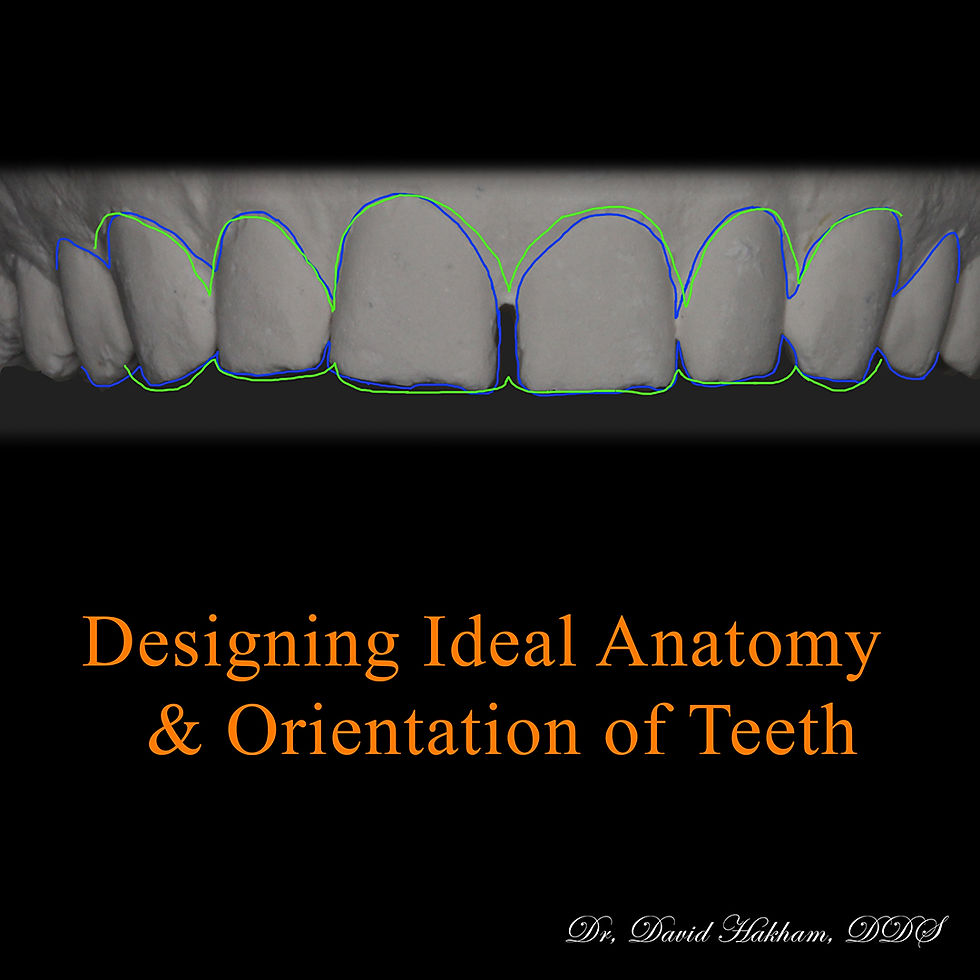
The next images show the existing tooth shapes and gum configuration traced on the study model. This creates a clear map of the starting anatomy.
Why does tracing matter? Small differences in tooth width, length, edge position, and direction can become easier to understand when the current outline is clearly marked. The tracing helps separate what already exists from what may be changed in the proposed design.
This stage also encourages deliberate treatment planning. Instead of making broad changes without a visual reference, the dentist can identify where a contour may need refinement and how a proposed change will relate to the teeth beside it.

Designing the Proposed Tooth Anatomy
After the existing contours were mapped, proposed tooth shapes were developed on the model. The images show the outlines being refined as the design progressed.
Several visual elements can be considered during this part of porcelain veneer planning:
The apparent width and length of each visible tooth
The position and curve of the biting edges
The transition from one tooth to the next
The direction or orientation of each tooth
The relationship between tooth contours and the gumline
The balance between symmetry and natural variation
These decisions are connected. Changing one front tooth can affect how the neighboring teeth appear. A carefully developed design therefore considers the visible group of teeth together.
Natural looking porcelain veneers are not created by making every tooth perfectly uniform. Real teeth contain subtle variations. Thoughtful smile design uses proportion, texture, contour, and alignment to create balance without making the result look artificial or generic.


Reproducing the Design in Wax
The proposed anatomy was then reproduced in wax on the study model. This step changed the design from traced outlines into a three dimensional physical form.
The wax design is important because a line drawing can suggest shape, but a physical reproduction shows volume and contour more clearly. It allows the planned tooth forms to be studied together and viewed from multiple directions. The dentist can assess whether the proposed proportions work as a complete smile before the final porcelain is made.
The wax design also communicates the plan to the dental laboratory. The laboratory is not asked to guess what the final smile should look like. Instead, the planned contours provide a reference for fabricating individualized porcelain restorations.


Fabricating the Porcelain Veneers
Once the design had been developed, the planned forms guided fabrication of the porcelain veneers. Porcelain veneers are thin, custom restorations that cover the front surface of selected teeth. They may be considered for certain concerns involving tooth shape, proportion, spacing, chips, or discoloration, but they are not appropriate for every patient.
The final appearance depends on more than shade. Porcelain can be shaped and layered to reproduce qualities associated with natural teeth, including variations in translucency, surface form, and the way light moves through the restoration. Those details must work with the planned tooth anatomy.
The amount of natural tooth preparation can vary. Dr. Hakham uses a conservative approach and aims to preserve natural tooth structure whenever the clinical situation allows. A complete examination is necessary before deciding whether veneers, bonding, whitening, orthodontic treatment, or another option is most appropriate.

Careful Placement and Evaluation
The case images then show placement of the porcelain veneers. At this stage, each restoration must be evaluated in relation to the planned design and the neighboring teeth.
The shape, color, and fit are reviewed before final placement. The completed restorations should not be considered as separate pieces. Together, they should reflect the proportions and contours established during planning.
This is one reason detailed preparation before fabrication matters. The study model, traced contours, proposed anatomy, and wax reproduction create a sequence of references that can guide the treatment rather than leaving the final appearance to chance.

The Completed Smile
The final close up and full smile comparisons show the result from matched views. The upper front teeth appear more balanced in shape, position, and proportion, while the completed smile maintains natural variation among the individual teeth.
The purpose of the comparison is not to suggest that every patient should receive the same smile. It demonstrates how a planned design can be translated into porcelain and then evaluated within the patient’s overall smile.
Every porcelain veneer case is different. The number of teeth involved, the condition of the natural teeth and gums, the bite, the patient’s goals, and the available treatment alternatives all influence the plan.


What Patients Should Understand Before Choosing Veneers
Porcelain veneers can improve selected aspects of a smile, but they should follow a careful dental evaluation. Active cavities, significant gum inflammation, or other oral health concerns may need to be addressed first. The dentist must also evaluate whether the teeth can support veneers and whether the bite creates risks that should be managed.
Patients should also understand that most porcelain veneer treatment involves removal of some enamel and is generally not reversible. Veneers differ from crowns because a veneer primarily covers the front surface of a tooth, while a crown covers the tooth more completely and is usually chosen when greater structural restoration is needed.
For smaller cosmetic changes, composite resin bonding, professional whitening, enamel contouring, orthodontic treatment, or another form of cosmetic dentistry may sometimes be more conservative choices. The best treatment is the one that fits the patient’s actual needs rather than the most extensive option.
Caring for Porcelain Veneers
Porcelain veneers do not require a separate hygiene routine, but the natural teeth and gums around them still need consistent care. Patients should brush with a soft toothbrush and nonabrasive fluoride toothpaste, clean between the teeth daily, and maintain regular dental examinations and professional cleanings.
It is also wise to avoid using teeth as tools or biting directly on very hard objects. Patients who clench or grind may need additional evaluation because repeated force can affect both natural teeth and restorations.
Why Choose Dr. David Hakham for Porcelain Veneers?
Dr. David Hakham, Dentist in Montebello, provides porcelain veneer treatment for patients from Montebello, Los Angeles, and surrounding communities. His approach combines detailed smile analysis, individualized planning, collaboration with the dental laboratory, advanced bonding, and a focus on preserving natural tooth structure whenever possible.
Rather than beginning with a standard veneer shape, treatment is planned around the patient’s own teeth, gumline, smile, and goals. The case shown here demonstrates that philosophy through each documented stage, from the first evaluation to the final result.
Frequently Asked Questions
What are porcelain veneers?
Porcelain veneers are thin, custom restorations bonded to the front surfaces of selected teeth. They can change aspects of visible tooth shape, proportion, color, contour, and spacing when appropriate.
Why is a study model used for veneer planning?
A study model provides a physical reproduction of the teeth. It helps the dentist evaluate current contours, develop proposed anatomy, and communicate the plan to the dental laboratory.
What is a wax design?
A wax design is a physical reproduction of the proposed tooth shapes on a model. It allows the planned contours and proportions to be reviewed before the final porcelain is fabricated.
Will porcelain veneers look natural?
Porcelain can reproduce natural looking color, translucency, and surface form. The result also depends on the design, laboratory work, placement, and how the veneers relate to the patient’s other teeth and overall smile.
Are veneers the right choice for every cosmetic concern?
No. Some patients may benefit from bonding, whitening, orthodontic treatment, contouring, or another option. An examination is needed to compare choices and determine which treatment is appropriate.
How do I schedule a porcelain veneer evaluation in Montebello?
Call 323-728-0241 to schedule an evaluation with Dr. David Hakham, Dentist in Montebello. The office serves patients from Montebello, Los Angeles, and nearby communities.
Schedule a Porcelain Veneer Evaluation
If you are considering porcelain veneers and want to understand how your smile can be planned in detail, call 323-728-0241. Dr. Hakham will evaluate your teeth, gums, bite, and goals before recommending the most appropriate treatment.
You can also explore the practice’s before and after smile gallery to see additional treatment examples.


