Emergency Treatment for a Broken Front Tooth: A Conservative Biomimetic Approach
A broken front tooth can happen in an instant.
Whether it occurs during sports, a fall at school, a playground accident, or while playing with friends, seeing a large piece of a front tooth break off can be alarming for both the patient and their family.
Because front teeth are so visible when we smile and speak, injuries involving these teeth often create immediate concern about appearance, long term health, and whether the tooth can be saved. Fortunately, modern dentistry offers treatment options that are often far more conservative than many people realize.
In some cases, it may even be possible to restore a broken tooth using the patient's own natural tooth structure. This case study highlights how Dr. David Hakham used a conservative biomimetic approach to restore a fractured front tooth in a young patient by carefully bonding the original tooth fragment back into place. The result preserved the patient's natural tooth structure, restored the appearance of the smile, and avoided more extensive treatment.

For patients throughout Montebello, Los Angeles, and the surrounding communities, this case serves as an important reminder that prompt care and proper handling of a broken tooth can sometimes make remarkably conservative treatment possible. Many patients throughout Southern California seek Dr. Hakham's care because of his focus on preserving natural tooth structure whenever possible.
A Childhood Accident Results in a Broken Front Tooth
A 10 year old boy was brought to Dr. Hakham's office after suffering a dental injury while playing with friends. During the accident, he was pushed to the ground and struck one of his upper front teeth. The impact caused a large portion of the tooth to fracture and separate from the remaining tooth structure.

The injury was immediately noticeable. Unlike teeth in the back of the mouth, front teeth are visible whenever a person smiles, talks, or laughs. As a result, injuries involving front teeth can be emotionally distressing in addition to causing physical damage.
The patient and his family were understandably concerned.
Questions immediately arose:
Was the tooth permanently damaged?
Would a root canal be necessary?
Could the tooth be repaired?
Would it look normal again?
Fortunately, the family took an important step that would later play a significant role in treatment. They located the broken piece of the tooth, preserved it carefully, and brought it with them to the appointment. That simple action created an opportunity for a highly conservative form of treatment.

Why Immediate Evaluation Matters After Dental Trauma
One of the most common mistakes patients make after a dental injury is assuming that if pain is minimal, treatment can wait.
Unfortunately, that is not always the case. A tooth may appear stable on the surface while hidden damage exists underneath. In other situations, treatment opportunities that exist immediately after an injury may become more difficult if evaluation is delayed.
When a patient experiences a broken or chipped tooth, a thorough examination helps determine:
The extent of the fracture
Whether the nerve has been injured
Whether the tooth remains structurally stable
Whether the tooth fragment can be used during treatment
What restorative options are available
Prompt evaluation allows treatment decisions to be made while the maximum number of options are still available. For this patient, seeking care quickly helped preserve the possibility of restoring the tooth with its original fragment.
Clinical Findings
After performing a careful examination, Dr. Hakham identified several encouraging findings.
The fracture involved the upper front tooth and had resulted in the loss of a significant portion of the visible crown of the tooth. Fortunately, the dental pulp, commonly referred to as the nerve, had not been exposed or permanently damaged. This was extremely important.
When fractures extend into the pulp, treatment often becomes more complex. In this case, however, the deeper structures of the tooth remained healthy. The fractured tooth fragment itself was also in excellent condition. Because the patient had recovered and preserved the fragment shortly after the accident, it remained intact and fit the remaining tooth structure precisely.
These findings made it possible to consider a treatment approach focused on preserving the patient's own natural tooth structure.
Understanding Biomimetic Dentistry
Many patients are unfamiliar with the term biomimetic dentistry. The word "biomimetic" simply means imitating nature. In dentistry, biomimetic principles focus on restoring damaged teeth in ways that mimic their natural strength, function, and appearance while preserving as much healthy tooth structure as possible.
Traditional restorative approaches sometimes require removing additional tooth structure in order to place larger restorations.
Biomimetic dentistry takes a different approach. Whenever appropriate, treatment is designed to conserve healthy tooth structure rather than remove it. The goal is not simply to repair a tooth but to preserve and strengthen what remains. Modern adhesive dentistry has made this philosophy increasingly effective. Advanced bonding materials allow dentists to create durable connections between restorative materials and natural tooth structure. These techniques often make highly conservative treatment possible in situations that may have required more aggressive treatment in the past.
For patients, the benefits can include:
Greater preservation of natural tooth structure
More conservative treatment
Excellent esthetics
Strong, predictable results
Long term preservation of natural teeth whenever possible
This philosophy guided treatment planning for this young patient.
Why Preserving Natural Tooth Structure Is Important
Natural enamel is an extraordinary material. Despite decades of advancements in dentistry, no restorative material can perfectly replicate every characteristic of natural tooth structure.
Whenever healthy tooth structure can be preserved, it is often advantageous to do so.
Preserving natural tooth structure may help maintain:
Natural strength
Natural appearance
Natural translucency
Natural surface texture
Long term tooth integrity
This concept becomes particularly important when treating young patients. At only 10 years old, this patient had many decades of use ahead for this tooth. Preserving as much natural tooth structure as possible was therefore an important treatment objective.
Because the fractured fragment remained available and fit perfectly, the possibility existed to restore the tooth using the patient's own natural tooth structure rather than replacing it entirely with restorative materials.
A Conservative Treatment Solution
After evaluating the tooth and fragment, Dr. Hakham determined that reattaching the original fragment represented the most conservative treatment option. Rather than rebuilding the missing portion of the tooth entirely with composite materials, the patient's own tooth fragment could potentially be returned to its original position.
This procedure is commonly referred to as tooth fragment reattachment. Although it may sound simple, successful fragment reattachment requires significant precision. The fragment must align accurately with the remaining tooth structure. Even very small discrepancies can affect the final appearance, bite, and function of the tooth.
Dr. Hakham carefully evaluated the fragment and confirmed that it fit the fractured tooth precisely. Using modern adhesive dentistry techniques, the fragment was meticulously positioned and bonded back into place. Advanced bonding materials were used to create a strong and durable connection between the fragment and the remaining tooth structure.
Because the patient's own tooth structure was preserved, the restoration retained the natural characteristics that are difficult to reproduce artificially. The shape, contour, color, translucency, and surface texture all matched perfectly because they were the patient's original tooth.
The Immediate Result
Once treatment was completed, the transformation was remarkable. The missing portion of the tooth had been restored. The original fragment had been preserved. The natural appearance of the smile had returned. Most importantly, the restoration blended seamlessly with the surrounding tooth structure.

From a normal conversational distance, it was extremely difficult to detect that the tooth had ever been fractured. For a young patient who had arrived with a visibly broken front tooth, the result was especially meaningful. The family was relieved to learn that the tooth could be restored conservatively while preserving its natural appearance.
Follow Up Evaluation
Successful treatment is measured not only by the immediate result but also by how the tooth performs over time. Approximately two months after treatment, the patient returned for a follow up evaluation. The findings were very encouraging. The tooth remained healthy and stable. The restoration continued to function successfully. The patient reported doing well and experienced no concerns. The tooth maintained its appearance and continued to blend naturally with the surrounding teeth.
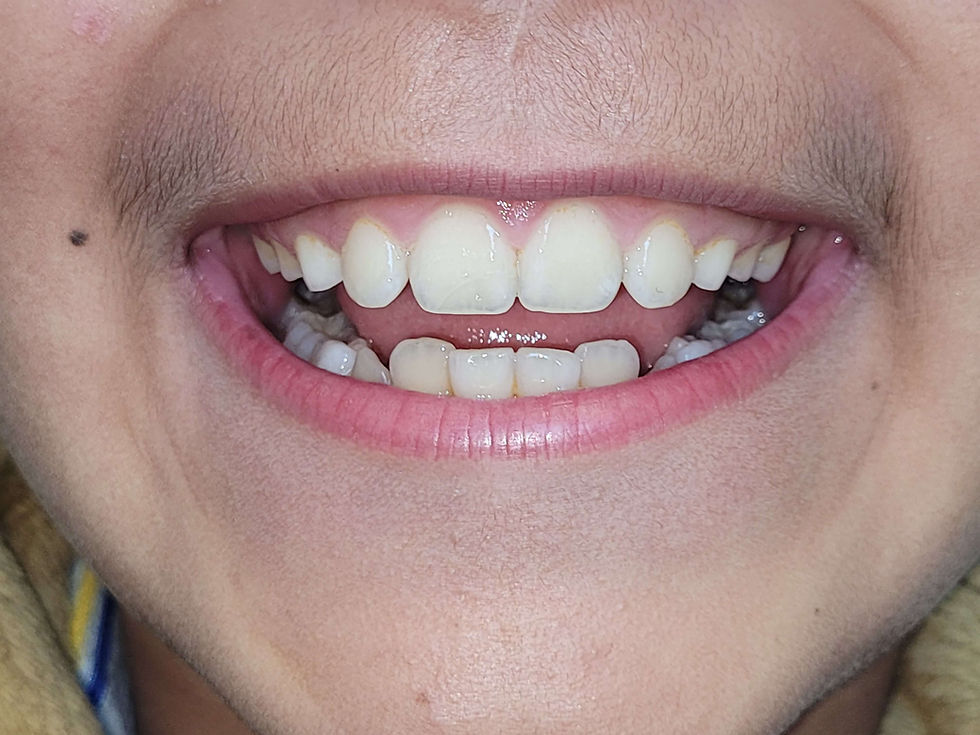
This follow up confirmed the success of the treatment and reinforced the value of a conservative approach when appropriate conditions are present.
What Should You Do If You Break a Front Tooth?
If you or your child suffers a broken front tooth, taking the proper steps can make a significant difference. First, try to locate any broken pieces of the tooth. If a fragment is found, handle it carefully and store it safely. Avoid throwing it away. While not every broken tooth fragment can be reused, some can be successfully reattached depending on the circumstances.
Next, contact a dentist as soon as possible. Prompt evaluation allows the dentist to assess the injury and determine what treatment options are available. Even if the tooth is not painful, professional evaluation is important. Some injuries involve damage that may not be immediately visible.
Not Every Broken Front Tooth Requires Extensive Treatment
One of the most important lessons from this case is that treatment should be based on the specific circumstances of the injury. Not every broken front tooth requires extensive reconstruction.
Not every fractured tooth requires a crown. Not every traumatic dental injury requires aggressive treatment. When conditions are favorable, conservative solutions may be available. This is one of the reasons many patients seek emergency dental care at Dr. David Hakham, Dentist in Montebello, because of their emphasis on preservation and conservative treatment planning. By focusing on preserving healthy tooth structure whenever possible, treatment can often remain simpler, more natural, and less invasive.
Frequently Asked Questions
What should I do if I break a front tooth?
Contact a dentist as soon as possible and save any broken pieces of the tooth if they can be located. Prompt evaluation may increase the number of treatment options available.
Can a broken piece of a tooth be bonded back on?
In some cases, yes. If the fragment is intact and fits properly, modern bonding techniques may allow the original tooth fragment to be reattached. Each case must be evaluated individually.
How soon should I see a dentist after breaking a tooth?
Ideally, you should seek evaluation immediately or as soon as possible. Early diagnosis can help identify hidden damage and may improve treatment options.
Can biomimetic dentistry help repair a broken front tooth?
Biomimetic dentistry focuses on preserving natural tooth structure whenever possible. Depending on the nature of the injury, conservative bonding techniques may allow a fractured tooth to be restored while maintaining much of the original tooth structure.
Schedule an Evaluation for a Broken or Chipped Tooth
If you or your child has experienced a broken front tooth, chipped tooth, or other dental injury, prompt evaluation is important.
Dr. David Hakham provides emergency dental care for patients throughout Montebello, Los Angeles, and the surrounding communities. His treatment philosophy emphasizes preserving natural tooth structure whenever possible and helping patients understand all available treatment options.
If you have suffered a dental injury, contact our office as soon as possible or schedule an appointment online. Early treatment may provide more opportunities for conservative care and can help restore both the health and appearance of your smile.


